
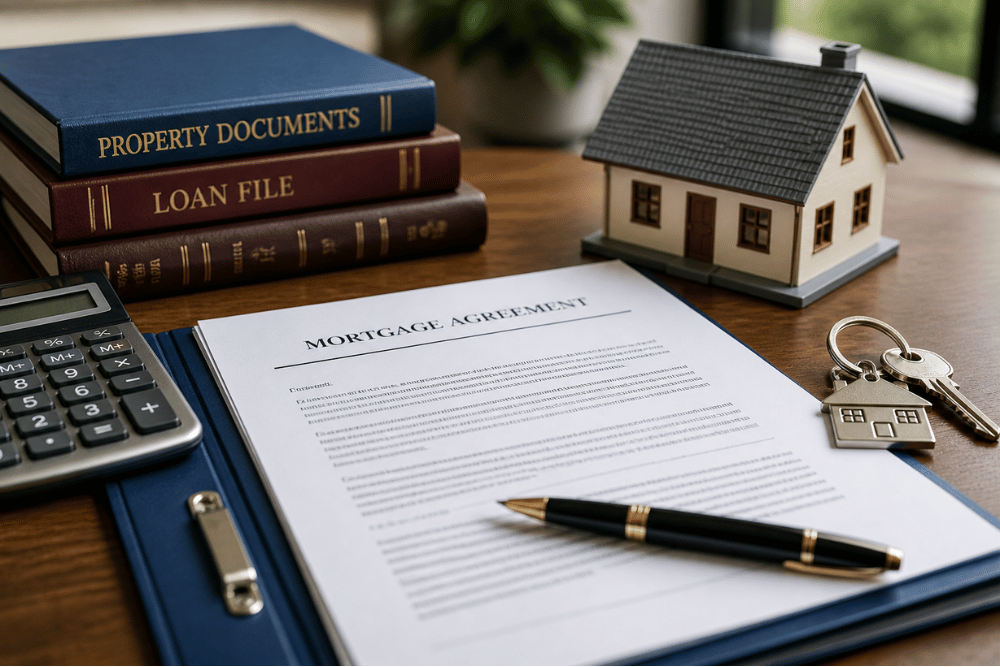
An equitable mortgage is a common process used by banks and financial institutions when a property owner wants to take a loan against property. In this process, the original property documents are deposited with the bank as security without physically transferring ownership.
This type of mortgage is widely used for home loans, business loans and property-backed financing. It is considered a faster and practical way for banks to secure loans while allowing the property owner to continue using the property.
The process starts with document verification. The bank checks ownership papers, property history, legal approvals and the identity of the borrower. Proper verification is important because the property becomes security against the loan amount.
After successful verification, the borrower deposits original title documents with the bank. This creates a legal charge over the property and secures the lender’s financial interest.
In many cases, proper legal drafting and registration support may also be required depending on the bank’s internal process and legal compliance requirements.